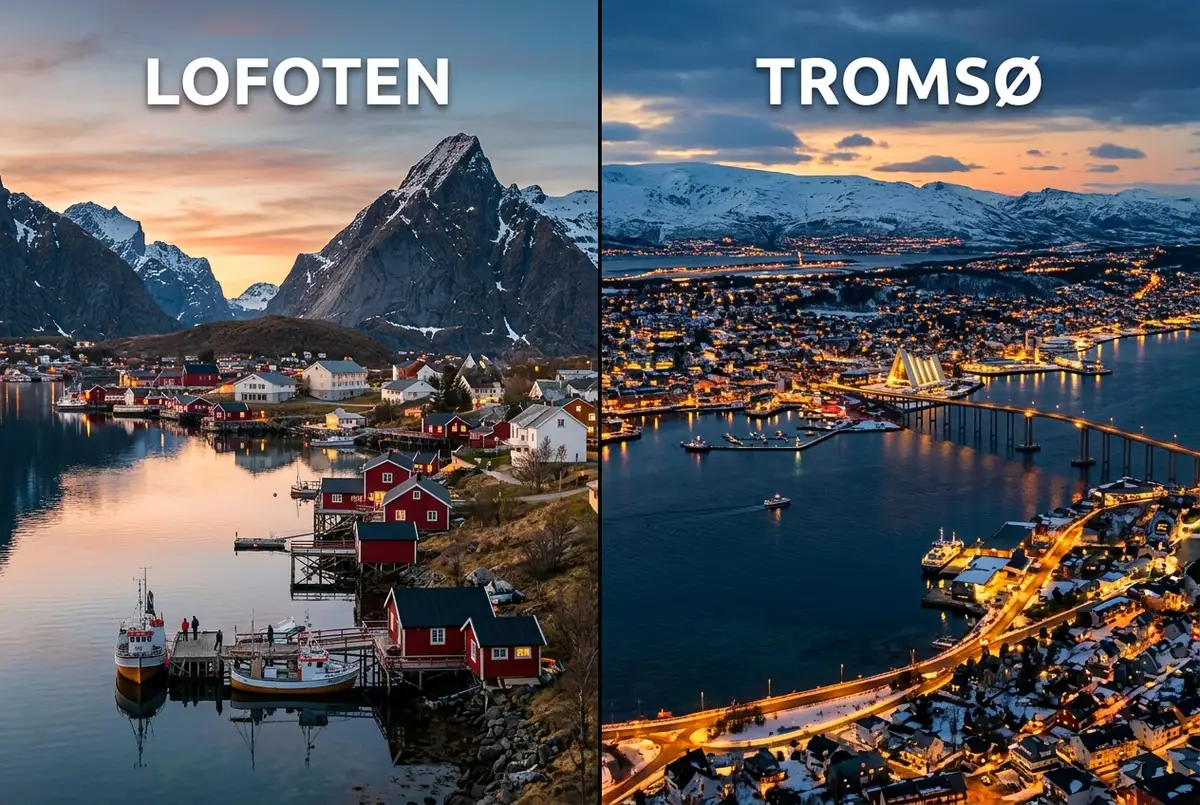
Lofoten Norway northern lights displays are exactly as real as Tromso’s, and the scenery framing them is genuinely more dramatic, but that does not make Lofoten the easier base for a first trip. Here is what I would actually do: build your trip around Tromso and treat Lofoten as a scenic detour rather than the place you base yourself for a week. This guide walks through why, comparing the two on scenery, logistics and tour choice, so you are picking with real trade-offs in front of you instead of a postcard photo deciding it for you.
What Makes Lofoten Such a Dramatic Backdrop for the Aurora?
Lofoten’s jagged granite peaks rise almost straight out of the sea, often with no foothills or gentle slope in between, which gives an aurora display a mountain silhouette that flat coastal terrain around Tromso simply cannot offer.
I would not undersell how much this matters for photography specifically. A green curtain of light hanging over a sheer 900 metre peak reads completely differently in a photo than the same display over a harbour skyline, and that is the single biggest reason so many aurora photographers plan a dedicated Lofoten Norway northern lights trip.
Are the Odds of Seeing the Northern Lights Actually Different in Lofoten?
Not meaningfully. Lofoten sits at a similar latitude to Tromso, well inside the aurora oval, so your underlying chances of a display appearing on any given clear night are close to identical between the two.
I would not choose Lofoten over Tromso expecting better odds, since the real difference is what happens once the sky does light up, not how often it does.
Is Lofoten Harder to Get to Than Tromso?
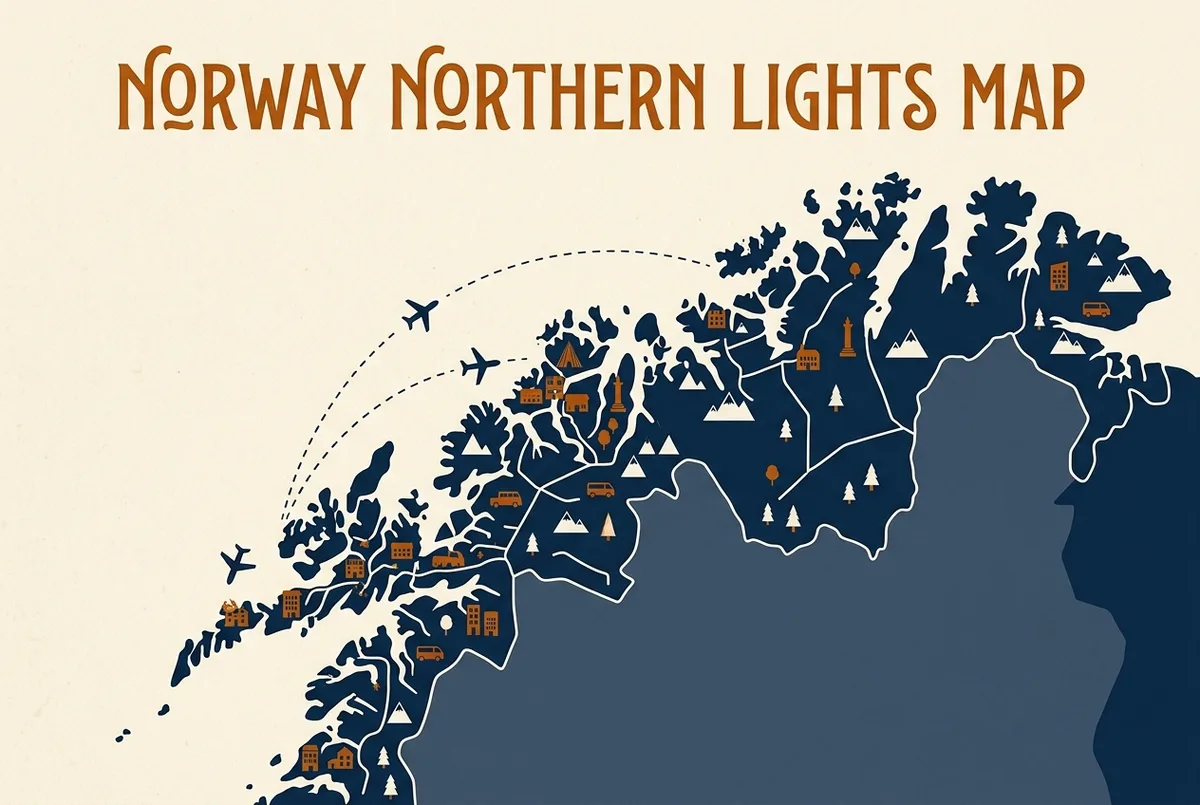
Yes, noticeably. Tromso has its own airport with direct flights from Oslo and several other European cities, while reaching Lofoten usually means flying into Bodo or Evenes first and then a further transfer by road or ferry, adding real hours to a trip that is already short on dark ones.
I would weigh this heavily on a short trip. My guide to getting to Tromso for the northern lights covers why a direct flight beats the longer overland routes for anyone trying to maximize actual chase nights rather than travel days.
How Does Lofoten’s Tour Market Compare to Tromso’s?
Thinner, by a wide margin. Tromso’s decades of aurora tourism have built a genuinely competitive operator market, which is why this site alone compares eight different tours from a budget €35 chase to a full reindeer and Sami dinner combo, while Lofoten’s smaller towns support only a handful of options, often booked out well in advance during peak season.
I would factor this into your planning directly. If you want a guide who is already reading tonight’s forecast and can pivot the whole evening’s route to chase a gap in the clouds, Tromso’s deeper bench of operators gives you more of that flexibility than Lofoten’s smaller scene typically can.
Should You Rent a Car to Chase the Lights in Lofoten?
I would think twice. Lofoten’s narrow, winding coastal roads get genuinely icy in winter, and an unfamiliar visitor navigating them in the dark while also trying to watch the sky is a real risk, not a minor inconvenience.
A guided minibus or small-group tour, where available, removes most of that risk by putting an Arctic-experienced driver in charge of both the road and the forecast, which is exactly the trade-off Tromso’s eight aurora tours compared on price and duration are built around.
How Does Accommodation Compare Between Tromso and Lofoten?
Tromso offers a much wider range of hotels, from budget guesthouses to harbourfront properties within walking distance of most tour meeting points, while Lofoten’s options are smaller, more scattered across fishing villages, and generally pricier for what you get given the limited supply.
I would book Lofoten accommodation earlier than you would in Tromso, since the best-located cabins and rorbuer, the traditional red fishermen’s huts many visitors want to stay in, sell out well ahead of the peak season. My guide to Hotel Aurora Tromso and where else to stay covers the harbourside options that make Tromso’s tour-day logistics considerably easier.
What Does a Typical Aurora Night Actually Look Like in Lofoten?
Usually simpler than a Tromso chase, since Lofoten’s smaller road network means less driving to find a dark spot away from the handful of small towns. Many visitors end up watching from a beach or a fjord viewpoint within a short drive of wherever they are staying, rather than a guide covering a hundred kilometers of coastline searching for a gap in the clouds.
I would see this as a genuine trade-off, not a downside. A simpler, shorter search suits travelers who want a quieter, more self-directed evening, while Tromso’s more active, forecast-driven chase model suits anyone who wants a guide doing the legwork of finding clear sky for them.
Is Lofoten Worth Adding to a Tromso-Based Trip?
Yes, as an add-on, not a replacement. A two or three night detour to Lofoten gives you the scenery without giving up Tromso’s bigger flight network and deeper tour choice for the bulk of your trip.
I would only add Lofoten if your itinerary already has five or six nights total. On a shorter trip, I would rather spend every available night maximizing your odds in Tromso’s well-connected base than lose a day or more to the transfer each way.
Does Lofoten Have Anything Beyond the Scenery to Offer?
A little, though it is a smaller draw than Tromso’s. Fishing villages like Reine and Henningsvaer are genuinely picturesque, and a slower pace suits travelers who find a bigger city overwhelming on a winter trip, but there is far less to fill your daylight hours than in Tromso itself.
I would not plan a full week around Lofoten’s daytime activities alone. My guide to things to do in Tromso in winter covers the cathedral, the Fjellheisen cable car and the harbour, all of which give you a reason to stay in Tromso between aurora attempts that Lofoten’s quieter towns cannot fully match.
Is Tromso or Alta a Better Comparison Point Than Lofoten?
It depends what you are optimizing for. Alta trades slightly drier air for a smaller tour market much like Lofoten does, while Lofoten trades logistics for scenery specifically. My full Tromso versus Alta comparison covers that other trade-off in detail if Alta’s Northern Lights Cathedral is also on your shortlist.
My Honest Recommendation
I would base a first Norway aurora trip in Tromso and treat Lofoten as the photography-focused detour it genuinely is, not the other way around. The flight access and tour choice gap is simply too large to ignore for anyone without extra days to spend on transfers.
If you already have the extra nights and photography is your main goal, I would still book most of your trip around a Tromso aurora borealis tour and carve out two or three nights in Lofoten specifically for the mountain backdrop, rather than committing a whole week to a base with a much thinner safety net of operators and flights.
Frequently Asked Questions
Is Lofoten better than Tromso for seeing the northern lights?
The odds are similar since both sit inside the aurora oval, but Lofoten’s dramatic peaks make it the better choice for photography specifically, while Tromso remains the easier, more bookable base overall.
How do I get to Lofoten to see the northern lights?
Most routes fly into Bodo or Evenes first, then continue by road or ferry, which adds real travel time compared to flying directly into Tromso.
Are there guided aurora tours in Lofoten?
Yes, but far fewer than in Tromso, and popular ones can sell out well ahead during peak season, so book early if Lofoten is your plan.
Can I visit both Tromso and Lofoten on one trip?
Yes, and I would recommend it over choosing Lofoten alone, but only if you have five or six nights or more so the transfer does not eat into your chase nights.
Is it safe to self-drive in Lofoten to chase the lights?
I would be cautious. Narrow, icy coastal roads in the dark are a real risk for an unfamiliar visitor, which is why a guided tour is the safer choice where one is available.
Explore Choosing Your Norway Base
Lofoten’s geography and climate are consistent with Visit Norway’s official Lofoten travel information.